In this article
When you are stressed, your breathing becomes fast and shallow. Pranayama, the breathing practices of yoga, works the other way round: slowing the breath helps the mind slow down. These five practices are simple enough to start today.
Before you start
- Sit comfortably with a straight back, on the floor or a chair.
- Practise on an empty stomach, or at least two hours after a meal.
- Breathe through the nose unless told otherwise.
- Never strain. If you feel dizzy, stop and breathe normally.
1. Deep abdominal breathing
Place one hand on your belly. Breathe in slowly so the belly rises, then breathe out so it falls. Make the out-breath a little longer than the in-breath. Practise for five minutes.
2. Anulom vilom (alternate nostril breathing)
Close the right nostril with your thumb and breathe in through the left. Close the left with your ring finger, open the right and breathe out. Breathe in through the right, then switch and breathe out through the left. That is one round. Start with five minutes.
3. Bhramari (humming bee breath)
Close your ears gently with your thumbs and your eyes with your fingers. Breathe in, then breathe out slowly while making a low humming sound. Feel the vibration in your head. Five to seven rounds are enough. Many people find it the most calming practice before sleep.
4. Sheetali (cooling breath)
Roll your tongue into a tube, breathe in through it, close your mouth and breathe out through the nose. If you cannot roll your tongue, breathe in through your teeth (sheetkari). Avoid it in cold weather or if you have a cold.
5. Ujjayi with a long exhale
Breathe in slowly with a slight narrowing of the throat, making a soft sound. Breathe out for longer than you breathed in. Practise lying down before sleep.
A simple routine for sleep
In bed, with the lights off: five minutes of abdominal breathing, five rounds of bhramari, then ujjayi with a long exhale until you feel sleepy.
Safety notes
- High blood pressure, heart disease, pregnancy, recent surgery: avoid breath holding and fast practices such as kapalbhati and bhastrika unless a teacher and doctor approve them.
- Epilepsy or a history of panic attacks: learn under supervision.
- Pranayama supports, but does not replace, treatment for anxiety, depression or insomnia. Do not stop prescribed medicine without your doctor's advice.
Pranayama at Shree Narayandham
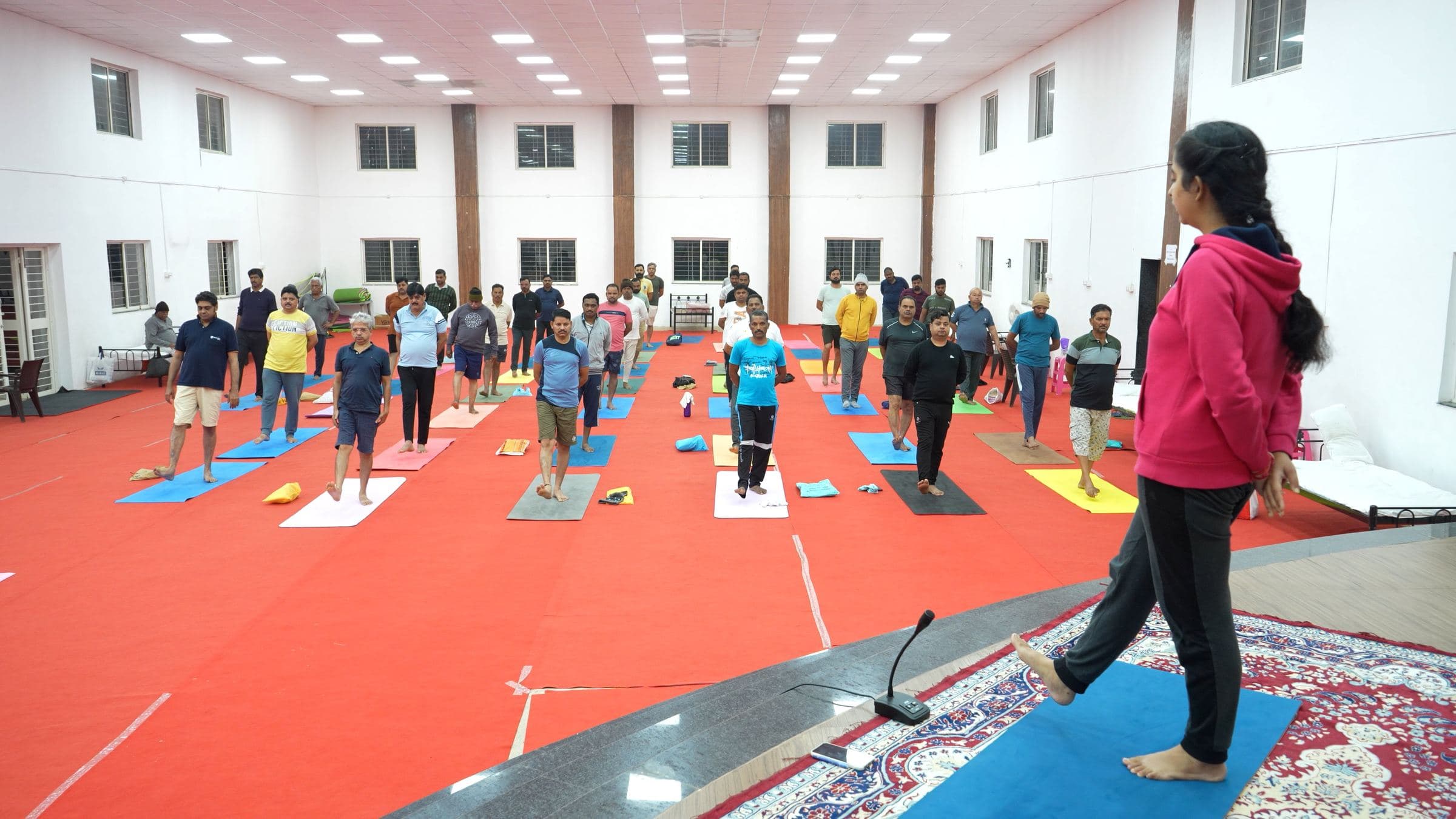
Yoga and pranayama are part of every stay, from 6 to 7 am and 6:30 to 7:30 pm, with meditation after lunch. Practices are adapted to your health, and our teachers help you build a routine for home. Read about yoga and meditation and our care for stress, anxiety and sleep.
Next step
Call +91 98810 68109 or book a consultation.
This article is general information, not medical advice. Please read our wellness disclaimer.
This article is general information from Shree Narayandham Naturopathy Center, not medical advice. Please consult a doctor before starting any treatment.
Ask our doctors
Have a question about this topic or your own health? Leave your number and one of our team will call you back.